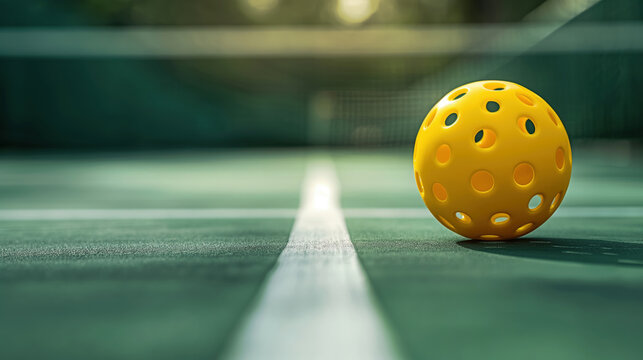
Seoul’s shopping malls have started smelling faintly of rubberised court flooring, and that’s no accident. Retailers and fashion brands across South Korea are courting pickleball players with genuine intent, building actual courts into retail space rather than simply stocking a shelf of paddles and hoping for the best.
The clearest example sits on the third floor of Lotte World Mall in Songpa district, where FILA and Lotte Department Store have opened the FILA Pickleball Club—a roughly 260-square-metre store housing Korea’s first regulation pickleball court installed inside a retail environment, measuring the full 13.4 by 6.1 metres. Paired with the neighbouring Tennis Metro store, the combined space forms a 750-square-metre racket sports zone, which is a rather serious commitment of prime retail real estate to a sport that barely registered domestically a few years back.
It isn’t just a court with a shop attached, either. The store stocks 292 items, spanning FILA’s own apparel and footwear alongside paddles and balls from Selkirk and Prince. Court time books through NAVER at 40,000 won on weekdays and 50,000 won at weekends, full-time coaches run one-on-one and group lessons in both Korean and English, and former national tennis player and coach Lee Hyung-taik leads sessions of his own. Through the end of next month, open play runs at half price, and anyone buying a paddle gets either an introductory lesson or an hour of court time thrown in. The strategy is fairly transparent: keep people in the building actually playing, not just browsing and leaving.
Skechers has taken a lighter-touch approach at Lotte Mall Eunpyeong, setting up a pop-up featuring a mini track alongside a small pickleball area, using the space to put paddles and balls in front of shoppers who came in for walking shoes and sneakers. It’s less a dedicated venue than a deliberate exposure play, but the intent lines up with everyone else moving into the space.
Kwangdong Pharmaceutical has gone a different route entirely, backing the sport through sponsorship rather than retail. The company signed an official partnership with the Korea Pickleball Association and supported the association president’s cup held last month at Oak Valley in Wonju, Gangwon Province, with a commitment to supply its Vita500 Ion Kick drink to association tournaments and events through 2027.
Following the Running Playbook
What ties these moves together is a shared history with an earlier boom. FILA opened a running-focused store in Seoul Forest this same month and has a 10-kilometre race planned for November, launching its pickleball venture practically alongside it. Kwangdong, similarly, built its sponsorship credentials backing running and marathon events before turning its attention to pickleball. The pattern reads less like coincidence and more like a shared industry bet: pickleball as the natural successor to running as Korea’s next mass-participation sport.
The domestic numbers, while still modest, back up why brands are moving now rather than waiting. Industry estimates put the number of pickleball clubs nationwide at around 100, with roughly 10,000 recreational players currently involved. Clubs aimed at players in their twenties and thirties are multiplying, and middle-aged and older players who’ve found tennis physically too demanding are increasingly switching over instead. A public pickleball facility opened at Gwangnaru Hangang Park in Seoul back in March, and local governments have begun folding the sport into their community sports programming more broadly.
Park Ok-woo, head of the sports division at Lotte Department Store, framed the company’s ambitions plainly: turning Lotte World Mall in Jamsil into a genuine racket sports hub where visitors can play both tennis and pickleball under one roof, with more differentiated sports experiences planned for customers both at home and abroad.
Whether Korea’s pickleball scene grows into the kind of mass movement running became remains to be seen. But judging by how much retail space is already being handed over to it, plenty of brands aren’t waiting around to find out.