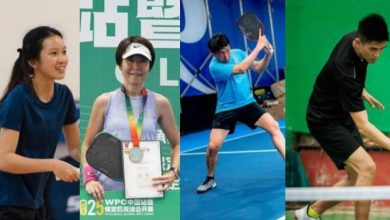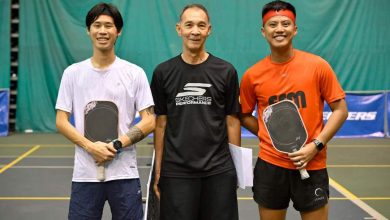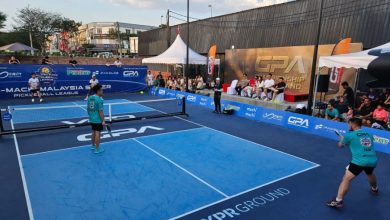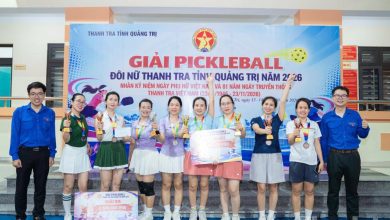
Before a sport can go big, it has to get organised. That’s the message from the newly elected leadership of the Malaysia Pickleball Association (MPA), which is wasting no time. Its plans include an anti-doping committee, an events calendar and a national ranking system, all aimed at turning a fast-growing pastime into a properly structured sport.
A Suspension Lifted
The new administration is taking over after a rocky stretch. Datuk Patrick Khoo Khiam Ping was elected president at the association’s extraordinary general meeting-cum-election on 3 October. He says he has been informed that the Youth and Sports Minister has signed a letter lifting the MPA’s suspension.
“A ministry official informed me (yesterday) that the minister has signed the letter lifting the suspension. It is now with the Sports Commissioner,” Khoo told Twentytwo13.
The suspension followed a governance dispute that began when founding president Farrell Choo resigned and handed leadership to the treasurer, Delima Ibrahim, who became acting president on 1 July 2025. The MPA constitution, however, says the deputy president should take over in such a case. Then-deputy president Harmeet Singh complained to the Sports Commissioner’s Office, which suspended the association on 27 February.
An ad hoc committee chaired by lawyer and sports administrator Datuk Seri Dr Jahaberdeen Mohamed Yunoos oversaw the MPA in the meantime. He says he submitted a recommendation to lift the suspension late last month, after the new office bearers were elected.
The To-Do List
While waiting for the paperwork, Khoo says he has been working with the other elected members and state affiliates to lay the groundwork for next year. “We have had several informal meetings,” he said. “Once the suspension is lifted, we can hold an official meeting to iron out the details.”
Among the priorities:
- An anti-doping committee. Khoo believes it will bring the sport closer to meeting the Olympic Council of Malaysia’s (OCM) affiliation requirements, which call for member associations to keep their anti-doping rules in line with the World Anti-Doping Code.
- An events calendar. The aim is to have the takwim sorted by next month, with an eye on 2027. The priority is rolling out development programmes in schools nationwide.
- A national ranking system. “The next step is to streamline the national ranking process when we send our players to international tournaments,” Khoo said.
- A SEA Games demonstration spot. Khoo hopes to have pickleball included as a demonstration sport at next year’s SEA Games in Malaysia. The suspension, he said, “curtailed plans for pickleball to be selected as a medal sport.” The MPA will write to the Malaysia SEA Games Organising Committee, the ministry and other authorities, and is speaking to corporate bodies, since it will have to cover the costs. The sport is “huge” in Singapore, he noted, which hosts the 2029 SEA Games.
A Familiar Path in the Philippines
The push for structure isn’t unique to Malaysia. In the Philippines, the milestone came in May, when the Games and Amusements Board (GAB) recognised pickleball as a professional sport and accredited the Pickle Yard Conference League (PYCL) as a professional sports organisation under its supervision and regulation, as we reported at the time.
The two cases aren’t identical. The GAB decision concerns a professional league, while the MPA is a national governing body building its foundations. But the logic is the same. As we noted then, regulation, structure and legitimacy are what turn grassroots enthusiasm into a sustainable sporting industry. PYCL president John Talusan called the GAB recognition a dream that “for the longest time” had been just that, and Malaysia’s new leadership is working through its own version of the checklist: proper governance, anti-doping rules, rankings and a calendar that players and sponsors can plan around.
It’s also the kind of work that builds credibility with the bodies that matter. Philippine pickleball needed an official stamp to be taken seriously, and Malaysian pickleball needs OCM affiliation and a SEA Games pathway to do the same.
Why It Matters
With an estimated 150,000 active players, Malaysia is one of the more active pickleball nations in Asia. The sport, though, has outgrown its administration, and the suspension shows what can happen when governance is shaky. If the new team can get its house in order, the benefits could stretch from schools and coaches to international tournaments and the SEA Games.
For now, the immediate step is simple: the suspension needs to be formally lifted, and the real work begins after that.