Selangor Uses Pickleball to Build Sports Tourism Credentials Ahead of ‘Visit Selangor Year 2026’

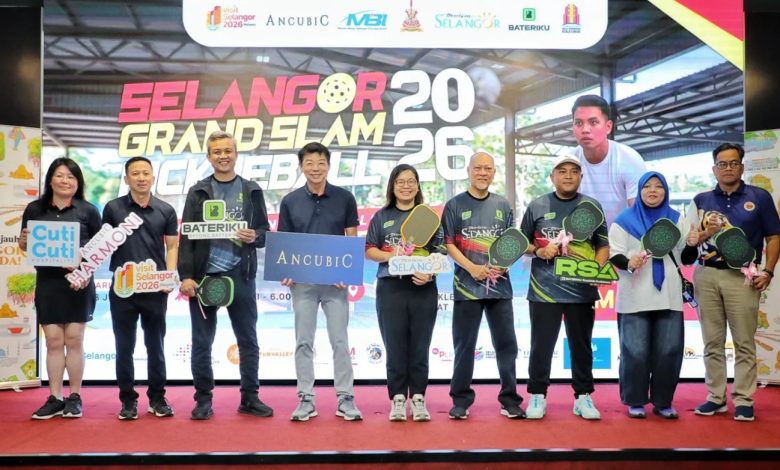
Selangor is making a deliberate play for sports tourism—and pickleball is one of its most compelling new tools.
The Selangor Grand Slam Pickleball 2026, organised in collaboration with the Kuala Langat Municipal Council, Bateriku, and Ancubic Group, wrapped up with a clear message from the state’s tourism leadership: conventional tourism products are no longer enough, and a sport that transcends age, background, and skill level represents exactly the kind of fresh offering that a destination needs to stay competitive.
Tourism Selangor chief executive officer Chua Yee Ling put it plainly.
“Destinations can no longer rely solely on conventional tourism products, and instead offer fresh and engaging experiences that cater to diverse visitor segments,” she said at the tournament. “This sport has successfully transcended barriers of age, background and skill level, creating an active, progressive and inclusive community. It is this potential that provides Selangor with the opportunity to explore new dimensions in the development of sports tourism.”
The timing is deliberate. Visit Selangor Year 2026 is already underway, and the state has set itself a target of nine million visitors for the year—a target that state executive councillor for local government and tourism Dato’ Ng Suee Lim expressed confidence in achieving back in April, even as the West Asia conflict introduced uncertainties into regional travel patterns. Selangor has responded by shifting its promotional focus toward Asian markets—Japan, China, Taiwan, and Southeast Asian countries—while also intensifying efforts to attract visitors from Australia, diversifying its tourist base rather than waiting for affected markets to recover.
Sports tourism fits neatly into that strategy. High-impact sporting events draw participants who travel, stay, eat, and spend—and then, ideally, come back. Pickleball’s unique characteristic is that its participants are also its audience. Unlike spectator sports where tourism value is concentrated among fans, pickleball events bring players themselves from outside the host region, along with their families and supporters. Every team that travels to Selangor for a Grand Slam event is a tourist party that the state’s hotels, restaurants, and attractions benefit from.
Chua was explicit about Selangor’s competitive advantages for this kind of event—complete infrastructure, extensive connectivity, world-class facilities, and cross-sector support that give the state a credible platform for scaling up its sports tourism ambitions.
“Selangor is well-positioned to attract more high-impact events,” she said. “Tourism Selangor believes that tourism and sports are complementary sectors that can drive economic growth while creating new investment opportunities.”
The Selangor Grand Slam Pickleball 2026 is one event. But the intent behind it—using pickleball to anchor a broader sports tourism positioning ahead of Visit Selangor Year—is a strategic bet that the state is clearly willing to back with institutional support. The sport is growing fast enough and attracting the right demographics broadly enough that the bet looks sound.
Sports and tourism have always been natural partners. Selangor is just making the relationship more official.