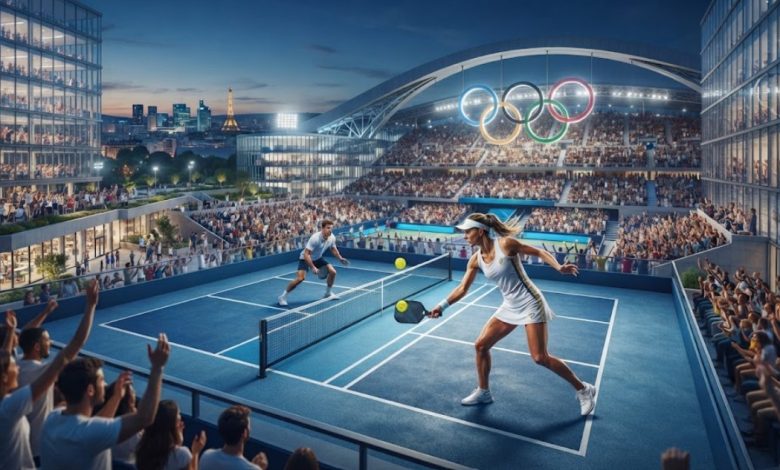
Pickleball has spent the last several years proving it can fill courts, sell out tournaments, and pull sponsors in by the dozen. None of that, on its own, gets the sport anywhere near an Olympic podium. Getting into the Games runs through a considerably narrower door, and according to a new FAQ released by the Global Pickleball Federation (GPF) that door has rules the sport’s own popularity cannot shortcut.
One Sport, One Governing Body
The starting point is bureaucratic, but it matters more than anything else on this list: the International Olympic Committee recognises exactly one International Federation per sport. An IF sets the worldwide rulebook, runs international competitions, manages rankings, handles anti‑doping compliance, and serves as the sport’s official liaison to the IOC. Beneath that sits the National Federation layer—the body governing the sport within a single country, running domestic competitions and selecting national teams. Just as the IOC allows only one IF globally, it allows only one recognised NF per country. Pickleball Canada, the Pickleball Japan Federation, the Ghana Pickleball Association—each is meant to be the sole official voice for the sport in its own nation.
That single‑body requirement is the foundation everything else in pickleball’s Olympic push is built on.
Three Roads to Olympic Recognition
According to the GPF, there is not just one way for a sport to reach the Olympics—there are three, each with its own demands.
The first and most direct route is unification: if every competing pickleball IF merges into a single global governing body that meets the IOC’s Olympic Charter standards, covering good governance, anti‑doping compliance, global reach, and proper statutes, the IOC can consider recognising that unified body outright.
The second path runs through AIMS and ARISF, the Alliance of Independent Recognised Members of Sport and the Group of IOC Recognised International Sports Federations. Together, they form the standard on‑ramp for new sports chasing Olympic status. To even qualify for AIMS, an IF needs strong governance, WADA anti‑doping compliance, a genuine global competition calendar, evaluation against a 35‑point criteria set, and—critically—at least 60 National Federations spread across three continents, each of those NFs meeting IOC‑level governance standards of their own. AIMS leads to ARISF, which leads toward IOC recognition, but as the GPF is careful to note, that progression is the usual one, not a guaranteed one.
The third path is the rarest: becoming a discipline under an existing Olympic IF, the way World Skate governs both skateboarding and roller sports under one roof. Pickleball could theoretically sit under badminton, table tennis, or tennis using this model, though it would still need to clear the same governance and universality bars as the other two pathways. No matter which door pickleball eventually walks through, the destination requirement is identical: one recognised IF, fully IOC compliant.
Why Unification Isn’t a Magic Password
It would be easy to assume that merging the sport’s competing federations solves the problem outright. It does not. Unification means combining rival IFs—the GPF’s own example is a hypothetical GPF‑plus‑WPF merger—into a single global body that becomes the sport’s one official voice to the IOC. What it does not do is guarantee entry into the Games. The IOC still makes its own independent call on recognition, no matter how clean the unification process looks on paper.
What unification does buy the sport is clarity: one global authority, one rulebook, one ranking system, one qualification pathway. That clarity translates into real advantages—easier recognition from governments and National Olympic Committees, stronger governance credentials, a better shot at IOC Solidarity funding, and simply a more attractive profile to present to Olympic decision‑makers. Unification does not guarantee anything, but it removes a lot of the friction that would otherwise slow the process down.
The Messy Part Nobody Skips
Unification sounds clean in a press release. In practice, the GPF’s own FAQ does not shy away from how complicated it actually is. Countries currently running two competing pickleball organisations may lose one of them entirely under IOC criteria. Leaders of merging federations may lose their positions outright. Every federation has to fall in line behind a single global rulebook, which is a bigger ask for smaller, less‑resourced federations still building out their own governance structures. Merging rankings, rules, and administrative systems simply takes time no matter how willing everyone is. And there is a very human wrinkle too—one side of a merger may feel like it is being absorbed rather than genuinely represented in the unified body that results.
None of that is unique to pickleball. It is the standard cost of consolidating a sport that grew up with multiple competing organisations, and it is precisely why unification helps the Olympic pathway without ever guaranteeing it.
What a Unified Body Actually Needs to Prove
Supposing the sport does unify, the resulting IF still has real boxes to check with the IOC: one global authority, strong governance, one rulebook, a consistent calendar of international events, genuine youth development programmes, WADA compliance, and global reach. That last measure is where things get specific. The IOC cares about universality—not just how many countries have people casually swinging a paddle around, but how many are actually ready for Olympic‑level competition. The benchmark cited by the GPF is 75 National Federations on the men’s side and 40 on the women’s side.
Get down to the country level, and the standards tighten further. Each NF under a recognised IF needs to be the only recognised federation in its country, with transparent governance, proper statutes, official recognition from its national Ministry of Sport or National Olympic Committee, WADA compliance, and an actual track record of running national events and development programmes. Where a country currently has two competing pickleball organisations, the unified IF has to pick one, based on good governance, democratic elections, financial transparency, national reach, and Olympic Charter compliance. That selection process alone could reshape the local pickleball landscape in more than a few countries.
The Wild Card: What Happens If Another Federation Shows Up?
One of the more pointed questions the GPF addresses head‑on is what happens if a brand‑new international federation emerges even after unification takes place. The honest answer: it does not change the underlying maths. A new IF might generate noise, but it still has to clear the exact same IOC criteria as everyone else—governance, WADA compliance, the 75/40 universality benchmark, proper statutes, a global calendar, and NF‑level recognition in every member country. What fresh competition does do is slow things down. Fragmentation and division work against the sport’s Olympic timeline regardless of who is causing them, and existing IFs are free to keep pursuing their own pathways independently, whether or not a new player enters the picture.
The Bottom Line
Strip away the acronyms, and the GPF’s core message is fairly simple: there is more than one road to the Olympics, with or without unification, but every single one of them ends at the same checkpoint—one recognised International Federation that fully satisfies IOC standards. Whether that is the GPF, the WPF, some newly unified entity, or another body entirely, the requirement does not bend. For now, the GPF says it is keeping every pathway option open, working toward whatever route best serves both its member nations and the broader goal of pickleball’s global growth.
The sport has already proven it can capture a crowd. What it still has to prove, on paper and in front of the IOC, is that it can govern itself like a sport ready for the biggest stage in the world.