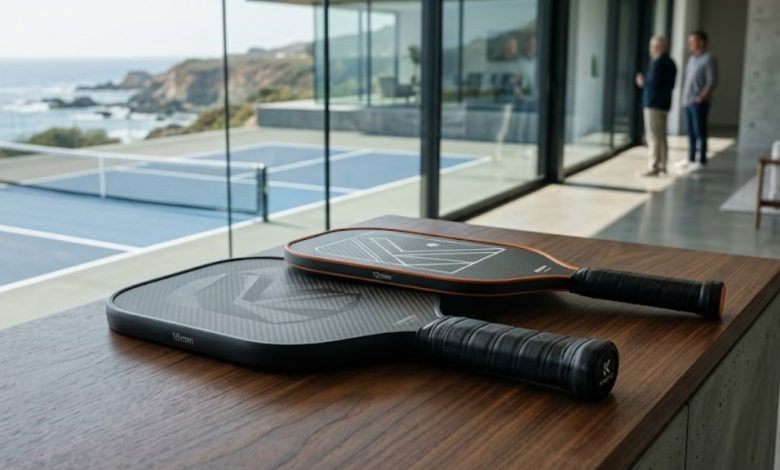
Every pickleball player reaches the same fork in the road eventually, usually somewhere around the point where a third-shot drop starts landing where it’s meant to and resets stop feeling like happy accidents. That’s when paddles that once all felt roughly the same suddenly start feeling different—and the question of whether to upgrade starts creeping in.
It’s worth saying upfront: this isn’t about chasing whatever’s newest. For most players, particularly those getting a few sessions in each week, the real question is narrower and more useful than that. Is your equipment actually complementing the game you’ve developed, or has your game moved on without it? Shots losing their power, placement getting less precise despite the work you’ve put in—these are the sort of signs worth paying attention to, and they’re a far better guide than simply counting the months since you started playing.
Why Thickness Is the Real Variable
If there’s one spec that genuinely changes how a paddle behaves underneath your hand, it’s core thickness—and understanding what each range actually does puts you in a much better position to judge whether an upgrade would help.
Thinner paddles, around the 12mm mark, are built for speed. Rebound is fast, put-aways come off the face with real snap, and hand speed at the kitchen feels almost effortless. The catch is forgiveness —touch shots demand more precision than a thicker paddle would ask for, and if your soft game is still coming together, that eagerness can work against you.
Move up to 14mm and you land somewhere genuinely versatile. There’s still enough pop for players who like to attack, but noticeably better control around the kitchen too, which is part of why so many intermediate players settle here. It holds up fine for a casual social session and just as well for a competitive weekend.
Then there’s 16mm, which trades outright speed for patience. Dinks feel more predictable, resets soak up pace far better, and blocking hard drives becomes considerably less of a lottery. Rather than generating power for you automatically, a thicker core rewards players who create it through timing and clean mechanics, which makes it a genuinely good option for anyone still building certain shots, particularly players moving from beginner into intermediate or competitive territory. It’s the sort of paddle that tends to grow alongside your game rather than dictate it from day one.
Match the Paddle to How You Actually Win Points
Rather than picking a thickness in isolation, it helps to think honestly about how you win rallies in the first place.
Attackers who like to finish points early with speed-ups and aggressive drives will generally get more out of a 12mm or 14mm paddle—the extra pop and ball speed suit that style directly, particularly on third-shot drives.
Players who’d rather construct a point patiently through dinks, waiting for the right opening, tend to find more of what they need in a 16mm paddle, which offers noticeably better feel and consistency at the kitchen line. The same goes for anyone who leans on lobs, resets, and defensive counter-punching — a softer response makes absorbing pace from harder hitters a good deal more manageable.
For the all-court player who mixes drives, drops, and resets more or less equally, a 14mm paddle tends to be the most balanced middle ground, flexible enough to shift between aggression and patience within the same match.
So, Is It Actually Time?
The honest answer has less to do with how long you’ve been playing and rather more to do with whether your current paddle is quietly capping your progress. If you’ve reached the stage where you’re deliberately choosing a drop over a drive, reading patterns mid-rally, and adjusting tactics based on who’s across the net from you, your equipment has genuinely started to matter.
No paddle promises instant improvement, and none of this is about finding some magic upgrade. What a well-chosen paddle does is simply stop getting in the way—giving you room to keep developing rather than working around limitations you’ve already outgrown.