Pickleball Misses Olympic Boat Again: Out of Brisbane 2032, Never Eligible for LA28, Probably Light Years Away From Consideration Anyway

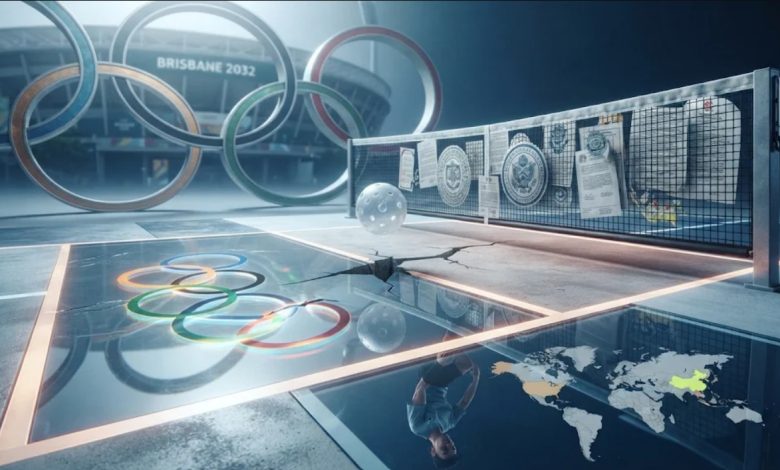
For a sport with tens of millions of players and million-dollar tours, pickleball has a stubborn problem: it still can’t get into the Olympics. The Brisbane 2032 organising committee has now said pickleball won’t be considered for the Games, ABC News in Australia reported this week, because it doesn’t meet the criteria, starting with the lack of a recognised international federation. Combined with its absence from Los Angeles 2028, that leaves 2036 as the first realistic target.
Why 2032 Is Closed
The IOC’s rule is blunt. “Only International Federations officially recognised by the IOC are eligible for inclusion,” an IOC spokesperson said, and that applies to extra sports proposed by a host city’s organisers too. Recognition depends on a sport’s global reach, governance, financial sustainability, international competitions, athlete representation and safeguarding.
No pickleball body has that recognition. The World Pickleball Federation (WPF), which unified with the International Pickleball Federation in 2025, says on its own website that it is “pursuing” recognition rather than claiming it. By its own checklist, its consolidated constitution is still in draft, its WADA-aligned anti-doping programme is in development and its global membership is a work in progress.
Brisbane’s rules are tighter still. In August, the IOC told federations that, beyond sports already on the Brisbane programme, only IOC-recognised federations whose disciplines were added by organisers for Tokyo 2020, Paris 2024 or LA28 would be eligible. The IOC said that approach is specific to Brisbane and will be reassessed for future Games.
A Conflict-of-Interest Question
The ABC report surfaced in an investigative profile of Andrew Liveris, the former Dow Chemical CEO who serves as president of the Brisbane 2032 Organising Committee. According to company searches cited by the ABC, Liveris holds an interest in almost 70 percent of the equity in the holding company behind PPA Tour Australia, whose president is his son, Anthony. He declared a potential conflict of interest on a committee register in 2024, noting a stake in a Brisbane professional pickleball team.
PPA Tour Australia, which held a live-streamed Brisbane tournament with more than $500,000 in prize money in October, partners with Pickleball Inc., the PPA Tour’s parent company, which raised US$225 million this year and has talked up its Olympic aspirations.
Liveris declined to answer the ABC’s questions about pickleball. The outlet noted that committee documents set out strict protocols for managing conflicts. Jacqueline Boaks of Curtin University’s Centre for Applied Ethics told the ABC that perceived conflicts can be handled properly as long as organisations are transparent enough to maintain “trust and confidence.”
In any case, the rulebook would have blocked any attempt to add pickleball, whoever was asking.
Why LA28 Passed It By and the Barriers to Entry
Los Angeles added five sports for 2028: baseball/softball, cricket, flag football, lacrosse and squash, approved by the IOC membership in October 2023. Pickleball wasn’t among them, and without an IOC-recognised federation, it wasn’t eligible. Host organisers make their proposals four to six years before the Games, and only sports with an international federation that follows the World Anti-Doping Code can be included.
Putting two and two together, it’s fair to say that pickleball’s Olympic dream is light years away from ever happening. And that’s because the sport has plenty of big hurdles to jump over if it at least wants to sniff a chance at the quadrennial showcase. These major obstacles are:
- Divided governance. The Olympic Charter calls for a single recognised federation per sport. Pickleball has two rival bodies: the WPF, headquartered in Lausanne, Switzerland, and the Global Pickleball Federation (GPF), established in late 2023 and backed by powerhouses including USA Pickleball, Canada, Australia and India. Both have entered talks about unification, but differences in interests and governance have reportedly stalled them.
- The global reach rule. The IOC’s criteria call for a summer sport to be widely practised in at least 75 countries across four continents for men and 40 countries across three continents for women. Pickleball may already exceed 70 countries on paper, but elite talent and infrastructure are concentrated in North America and parts of Asia, while in Africa and South America the sport is still in its infancy.
- Anti-doping and governance. Federations must comply with the World Anti-Doping Code and recognise the Court of Arbitration for Sport. Pickleball’s legal and sports-medicine infrastructure has lagged behind its rapid growth, and WADA-compliant testing has reportedly only begun in pilot form at select European events. The GPF, though, has already taken steps to tick this criterion moving forward, although it remains to be seen if it can actually make a big difference.
- A disconnect between federations and commercial tours. The most lucrative events, such as the PPA Tour and MLP, run as independent commercial enterprises with their own rule variations and private rating systems such as DUPR, outside the authority of either federation. That leaves no single pathway from amateur play to the elite level. In other words, there is no solitary overseer of these competitions as they are in essense private enterprises.
- Competition from other racket sports. The IOC caps athlete numbers at about 10,500 per Summer Games, so any new sport means cuts elsewhere. Tennis, badminton, table tennis and squash are already on the programme, and padel, which has a single international federation, sits ahead of pickleball in the queue.
Is the Decision Final?
For 2032, it’s about as final as it gets. The IOC Executive Board has set a revised timetable: an intermediate classification of sports in December, followed by a final vote on the Brisbane programme at the 147th IOC Session in Punta Cana, Dominican Republic, in April 2027.
Brisbane will also be the first Games under IOC President Kirsty Coventry’s “Fit for the Future” overhaul, which keeps the athlete cap, so every new discipline means cuts somewhere else. Coventry has said Brisbane will have fewer sports than the 36 at LA28, noting that “the cost and complexity comes when you start adding additional venues for single purpose events.”
What’s Next: 2036 and the Next Four Years
The next opening is 2036, and its host isn’t expected to be chosen until the IOC’s 2029 Session. The IOC is also weighing a limit of four additional sports per Summer Games. To be ready, the years from 2027 to 2030 will be decisive, according to analysts: the sport has to unify its governance, standardise anti-doping compliance and prove its staying power beyond North America and Asia.
(For an in-depth breakdown on what needs to happen for pickleball to make it to the Olympics, check out our previous analysis HERE.)
What It Means for Asia
Closer to home, the Olympic dream is a long way off, but smaller stages are opening up. In Malaysia, the national association is seeking to include pickleball as a demonstration sport at the 2027 SEA Games, and it has already spoken of building anti-doping programmes and a national ranking system, the kind of groundwork Olympic bodies look for.
Before any of that matters, though, pickleball has to do the one thing it hasn’t managed yet: get a single federation recognised by the IOC.