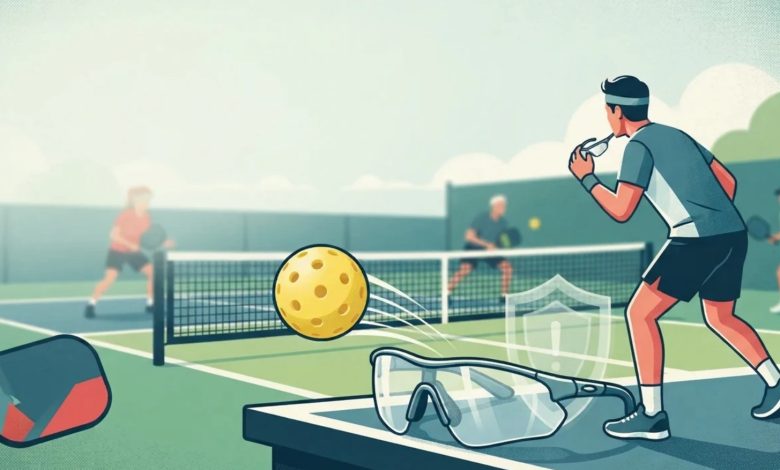
Pickleball can be dangerous to your eyes. We reported about ths before, and we’ll report about it again. It’s that serious.
The sport’s meteoric rise and still-growing popularity is bringing more people onto the courts. But doctors are warning that the sport’s speed and playing conditions may also expose participants to serious eye injuries, with one reported case highlighting the potential long-term consequences of taking a direct hit from the ball.
A case published in BMJ Case Reports detailed how a middle-aged woman developed glaucoma following an eye injury sustained while playing pickleball without protective eyewear. The unnamed woman is obviously not the first to suffer such injury as it is actually far more common that you’d care to expect. In fact, just this year, Malaysian actor Datuk Aaron Aziz needed medical attention after he got hit in left eye during play. Then, last year, a US-based study found that an increase in eye injuries coincided in a rise in people getting hurt playing pickleball. And, just recently, doctors at the Khoo Teck Puat Hospital in Singapore reported treating patients with eye injuries from pickleball, particularly from the ball hitting the eye directly.
What Happened to the Woman?
Now, back to the woman at the beginning. The player, according to the study, was struck directly in her left eye and immediately experienced blurred vision, severe pain and extreme sensitivity to light. Medical examinations revealed elevated intraocular pressure, which can increase the risk of glaucoma, as well as hyphema — a build-up of blood in the space between the cornea and iris that requires urgent medical attention.
Her initial symptoms appeared to improve following emergency treatment. However, the situation deteriorated two weeks later, when the blurred vision and pain returned. Doctors intensified treatment, but the pressure inside her injured eye remained abnormally high.
Three months after the incident, she had developed optic nerve damage and impaired vision consistent with glaucoma. Even after surgery, the condition persisted, leaving her with an increased risk of further complications, including cataracts, and the need for regular eye examinations.
The case is particularly notable because the woman reportedly had no known risk factors for glaucoma, including diabetes or high blood pressure, before the incident.
Doctors identified the condition as angle-recession glaucoma, a form of the disease that can develop following blunt trauma to the eye. While the report concerns a single patient, its authors say it highlights a wider concern as pickleball participation continues to expand.
Speed and Proximity Create a Different Risk
Pickleball combines elements of badminton, tennis and table tennis, but its playing environment presents specific challenges when it comes to eye protection. To wit, pickleball players often compete close to the net, leaving limited reaction time when a shot comes back quickly. The ball’s speed, the pace of rallies and the distance between opponents can all contribute to the risk of direct impact.
Modern paddles have also increased the sport’s offensive potential, with some shots exceeding 60 miles per hour (97 kilometres per hour). That is a considerable speed for a ball travelling across a relatively compact court.
The report’s authors argue that these characteristics, alongside the sport’s participant demographics, could produce injury patterns that require targeted preventive measures. Older players, in particular, may face greater exposure if they participate without protective eyewear.
Protection Needs to Keep Pace With Growth
Of course, it should duly be noted that the reported case does not establish how frequently pickleball causes serious eye injuries, nor does it mean that every impact will lead to lasting damage. However, it reinforces an important point. A sport’s accessibility does not make it free from risk. And it is a point worth taking note of the next time you take the court.
The authors also note that blunt eye trauma is already a recognised cause of glaucoma and that other pickleball-related eye injuries have been documented. They also suggest that the sport may need its own safety guidelines, similar to those adopted in other racket sports.
For a game experiencing rapid growth, that conversation should not be an afterthought. More players, faster shots and increasingly powerful equipment make awareness and prevention increasingly relevant. Protective eyewear, in this case, is one measure players can consider to reduce the risk of eye injuries. More broadly, clubs, organisers and governing bodies have a role in making safety part of the playing culture rather than something addressed only after an incident.
Pickleball has built much of its appeal around accessibility and social participation. Preserving that appeal means ensuring that players can enjoy the game while taking its risks seriously. The sport’s development should not be measured by participation and equipment sales alone, but also by how well it protects the people on court.