
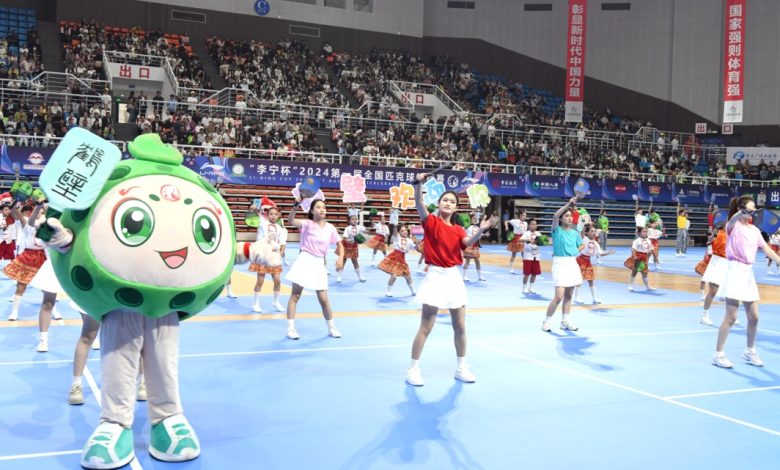
In the heart of Henan province, the city of Hebi has staged one of the most remarkable sporting transformations in recent memory. What was once a little-known racquet game has, in just a few short years, become a defining feature of the city’s identity—pickleball has ignited a revolution.
Introduced only in 2023, the sport has swept through Hebi with astonishing speed. More than a million residents have picked up a paddle, and the phrase “Fancy a game of pickleball?” has become a familiar refrain in daily life. From government offices to village squares, from schools to tourist sites, the game has embedded itself in the fabric of the community.
Courts, Coaches, and Competitions
Hebi’s success is no accident. The city invested heavily in infrastructure, building over 1,500 courts and installing thousands of fitness stations to ensure that every resident is within easy reach of facilities. Alongside this, the Hebi Pickleball Association has trained hundreds of coaches, referees, and athletes, creating a professional backbone to support grassroots enthusiasm.
Competitions now run at every level—city-wide opens, county championships, and community tournaments—providing structured opportunities for play. The result is a thriving ecosystem where casual hobbyists rub shoulders with serious competitors.
Recognition and Identity
The sport’s meteoric rise has not gone unnoticed. In 2023, the World Pickleball Association named Hebi China’s first “Pickleball City,” a title that has since been reinforced by the hosting of 23 major events, including national championships and international exhibitions.
For locals, pickleball has become part of Hebi’s cultural identity. Residents who once spoke proudly of the city’s ancient texts and historic landmarks now add pickleball to the list of defining features. Visitors are treated not only to Hebi’s heritage sites and river scenery but also to the sight of packed pickleball courts buzzing with energy.
Tourism and Industry
The sport has also proved a boon for tourism and commerce. Pickleball-themed markets, interactive zones at heritage sites, and cultural products such as clay figurines and mascots have all contributed to a surge in visitor numbers. During the 2025 National Championships, tourist sites reported a 42% increase in footfall, with spending exceeding 15 million yuan.
Manufacturing has followed suit. Local companies now produce paddles, balls, and equipment, some adorned with motifs from Hebi’s literary heritage, and export them worldwide. The city has effectively built an industrial chain around the sport, blending tradition with modern innovation.
A Sport for All
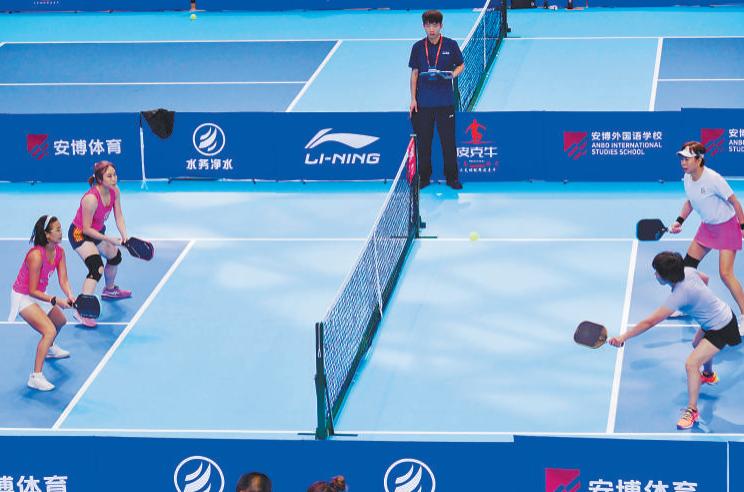
Part of pickleball’s appeal lies in its accessibility. Combining elements of tennis, badminton, and table tennis, it is easy to learn, safe, and suitable for all ages. Whether played as a light workout or in competitive settings, it offers both fun and fitness. Hebi has harnessed this versatility to promote wider integration between sport, culture, tourism, and technology, even deploying 5G and 4K broadcasting to elevate live coverage.
Hebi’s embrace of pickleball is more than a sporting success—it is a civic transformation. By weaving the game into everyday life, the city has created a new identity, boosted its economy, and positioned itself as a national leader in sports innovation. What began as a pastime has become a movement, and Hebi now stands proudly as China’s Pickleball City.



One Comment