China’s next big sport might already be here.
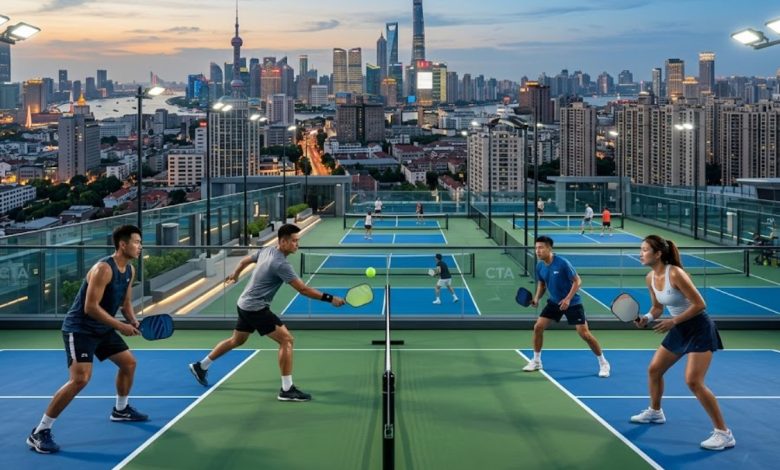
Pickleball—the hybrid of tennis, badminton, and table tennis that has swept through the United States and is now moving rapidly across Asia—is establishing itself in China with a speed and structural seriousness that suggests this is not a passing trend.
From Niche to National
The numbers are striking. The China Pickleball Circuit, launched by the Chinese Tennis Association in March 2024, started with around 80 events. By 2026, more than 600 are planned annually. In 2025 alone, China trained more than 2,300 pickleball referees—nearly six times the previous year’s figure.
Sun Wenbing, deputy secretary-general of the CTA, put it plainly. “Pickleball is no longer a niche sport for a small group of people,” she said. “It is becoming a new option for mass fitness and a new hot spot for sports consumption.”
The sport has also received formal state backing. China’s State Council issued a policy document in 2025 aimed at encouraging the development of emerging sports, and the General Administration of Sport included pickleball as an official event in the second National Fitness Games scheduled for April 2026. The conditions for growth have been deliberately created—not simply stumbled upon.
Why It Works Here
The sport’s appeal in China maps neatly onto an existing sporting culture. Chinese players already familiar with table tennis and badminton—both of which share reflexes, court compactness, and paddle mechanics with pickleball—find the transition relatively natural.
Beijing-based sports commentator Zhang Bin framed it well. “The sport’s quick reflexes, compact court and the similarities with table tennis and badminton make it easier for players familiar with those sports to adapt,” he said.
For recreational players like Chengdu-based professional Yin Hongrun, the appeal is simpler. “I used to play badminton, but pickleball feels easier to start,” she said. “You can learn the basics very quickly, and the rallies are really fun.”
The Road Ahead
Infrastructure is still catching up. Dedicated courts are limited across most Chinese cities, with many games played on converted tennis or badminton surfaces. Traditional racquet sports remain far more widespread in terms of participation and cultural presence.
But when a sport goes from 80 tournaments to 600 in two years, backed by national policy and international exhibition events featuring names like Andre Agassi and Steffi Graf—the trajectory is clear.
China is not just discovering pickleball. It is building a system around it.