SM Supermalls Bets Big on Pickleball—And It Is Paying Off and Reshaping the Mall Business


Pickleball courts are not just filling up. They are filling up the rest of the mall too.
What began as a recreational bet is becoming one of SM Supermalls’ most strategically significant business moves. The country’s largest mall operator is not merely building pickleball courts to ride a sporting trend—it is using the sport to fundamentally rethink what a mall is for, how long people stay inside one, and what makes them come back.
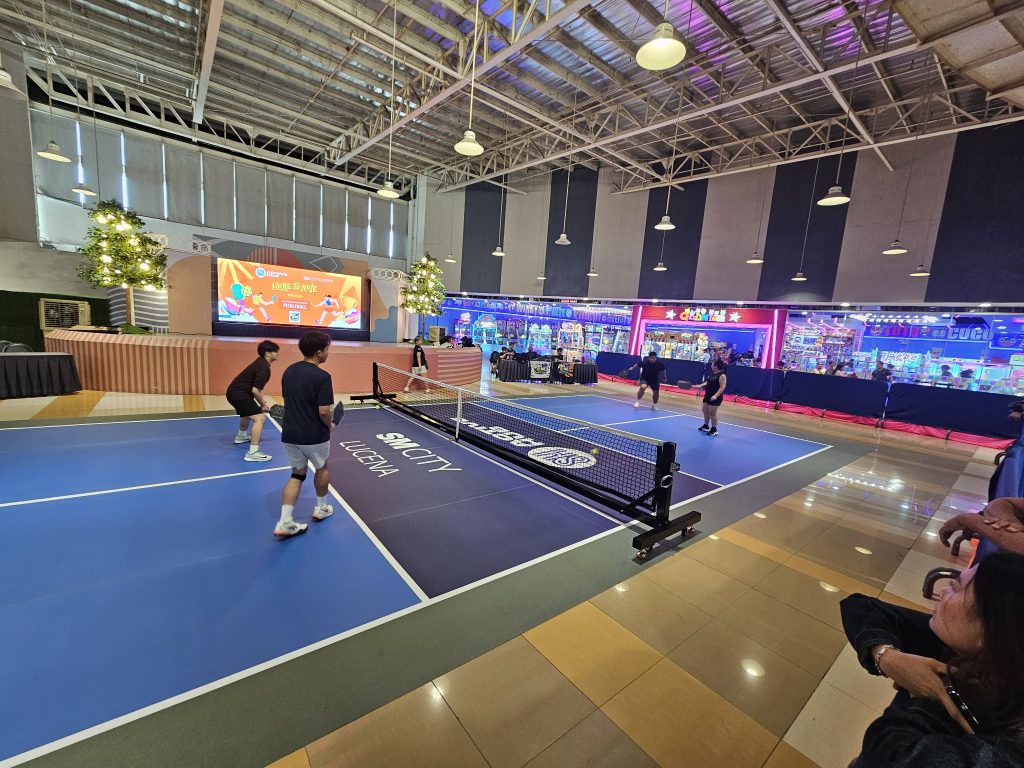
Joseph Francis Silva, SM Sports and Leisure Centers senior assistant vice president for operations, laid out the numbers and the logic in clear terms on ANC’s Business Outlook. The company currently operates 89 pickleball courts across 29 malls—up from 86 just weeks ago—and expects to surpass 100 courts before the end of 2026.
“We are proud to say that we are still growing,” Silva said. “In the next few months, we are actually still building more courts.”
The Two-Hour Effect
The business case for pickleball is not simply about court bookings. It is about what happens after the match ends.
According to Silva, pickleball players typically stay inside the mall for at least two additional hours after finishing their games—eating, hydrating, shopping for sporting goods, and socialising with the people they just played with. That extended dwell time is precisely what mall operators have been chasing as e-commerce continues to peel away transactional shopping trips that used to drive foot traffic.
“It’s a minimum of two hours. After playing, they hydrate, then they hang out with friends—they choose where to eat,” Silva said.
When consumers shop online, they are optimising for convenience. When they come to a mall to play pickleball, they are optimising for experience—and experience spending tends to cascade across tenants. The restaurant next to the courts benefits. So does the sporting goods store, the bubble tea shop, and the café on the walk back to the car park.
SM Supermalls logged 1.4 billion visits in 2025—averaging 115 million per month—despite softer consumer spending and broader economic headwinds. The company attributes continued foot traffic, in part, to experience-led attractions including sports facilities, entertainment concepts, and community events. Pickleball, by Silva’s own account, has become a major driver of that formula.
“Yes, it’s a major line item already in our business, and it keeps on growing,” he said.
The Generational Play
One of the arguments SM makes for pickleball’s staying power—as opposed to earlier fitness trends that burned bright and faded—is the sport’s unusual cross-generational appeal.
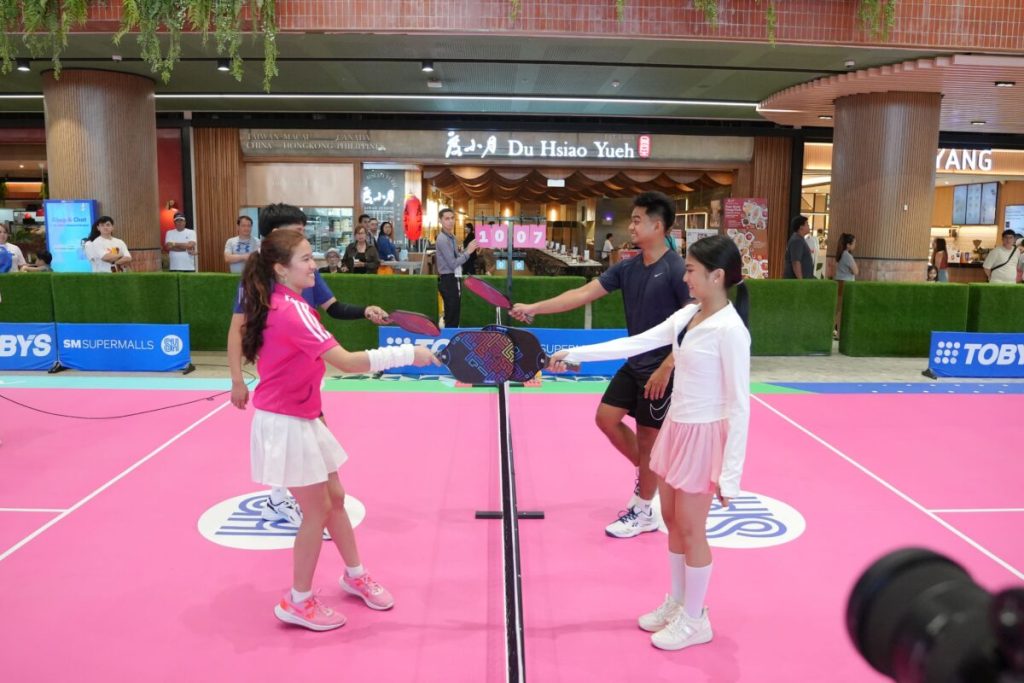
“You can have three generations in one court—you have your lolo, your lola, and their grandkids playing,” Silva said.
That is not marketing language. It is observable reality on SM’s courts, where players ranging from retired seniors to university students to working professionals occupy the same facility, often at the same time. A sport that binds generations rather than dividing them by age group is rare—and for a mall operator whose business model depends on drawing as wide a consumer base as possible, it is enormously valuable.
The most striking evidence of demand came from SM’s newest facility. Four E-Com Center’s pickleball courts, which opened on 1 May, were fully booked through August within two weeks of opening.
“After two weeks, it was full until August,” Silva said.
Redefining the Mall
SM’s pickleball strategy is part of a larger repositioning that the company has been accelerating in recent years. The traditional mall model—anchor tenants surrounded by retail, punctuated by a food court—is under pressure from structural shifts in consumer behaviour that predate and postdate the pandemic. Shoppers who once made a mall trip to buy clothes or electronics can now do that from their sofas. What they cannot do from their sofas is play pickleball, share a post-match meal, watch a tournament final, or feel part of a sporting community.
SM is leaning into that gap deliberately.
“Luxury now is not really on the product. It’s on the experiences,” Silva said.
That philosophy is reshaping how SM designs and evaluates its facilities. Rather than measuring success purely through rental income from retail tenants, Silva said the company now assesses how sports infrastructure influences the entire mall ecosystem—packed courts, fully booked tournaments, and thriving communities have become key indicators guiding where new investment goes.
It is also influencing how SM thinks about the sport beyond the facility level. The company plans to expand tournaments, build out coaching programmes, and improve access to training—with a longer-term vision of contributing to competitive development.
“The important thing here is to make it more accessible first. When you have access to these facilities, the champions follow,” Silva said.
SM Looks Forward
Looking five years ahead, Silva said SM wants pickleball to be a mainstream sport in the Philippines—and wants SM to be the company that helped make it so.
“In five years, we want to see pickleball becoming a mainstream sport in the Philippines, and SM becoming a major catalyst,” he said.
The courts are filling up. The restaurants next to them are filling up. The booking calendars are full through summer. The gamble has paid off—and SM is not done betting.