Asia Pickleball Summit 2.0 Draws 1,500 Participants as Calls Grow for More Youth Participation


Pickleball in Asia has found its adults. Now it needs to find its youngsters
That was the central message coming out of the Asia Pickleball Summit 2.0 (APS 2.0), held at the Hextar World Exhibition Hall at Empire City in Kuala Lumpur, where 1,500 participants gathered alongside representatives from 14 countries, more than 40 international speakers, and 18 panels covering policy, business, strategy, and performance. The event—organised by ReSkills in partnership with co-organisers AFA and APTV—brought together federation leaders, court operators, professional players, brand owners, and investors under one roof for what its organisers framed as a conversation not just about the sport’s momentum, but about securing its long-term future.
The consensus in the room was clear: the next frontier for pickleball’s growth in Asia is the youth.
Dr Kelvin Yii Lee Wuen, political secretary to the Minister of Entrepreneur and Cooperatives Development and a board member of the World Pickleball Federation, opened the summit alongside APS 2.0 organising chairperson Ken Lim and made the point directly.
“To make further inroads in the game in our country, we must push the sport to the grassroots level,” Dr Yii said. “What is needed now is to see pickleball as a sport competed in at the school and junior levels. And I can assure all that the officials involved in pickleball are working very hard to see this wonderful goal achieved.”
He also flagged that WPF is actively working towards including pickleball in major competitions such as the Asian Games and the Olympics—a goal that most experts at the summit agreed depends directly on how quickly the sport builds a credible youth base.
Collin Johns, professional pickleball athlete and RPO Global Technical Director, pointed to coaching infrastructure as the bridge between the sport’s current popularity and its competitive future.
“I also believe having good coaches will help the sport to grow with the youth,” Johns said. “It’s so great to see Malaysia taking moves to improve the coaching set-up, and that will also help the game to be popular with the young, and that ensures a great future for the sport.”
Malaysia and Vietnams as Leaders of the Pack
Johns identified Malaysia and Vietnam as the countries best positioned to become frontrunners in international competition, citing strong facilities and a growing coaching network in both countries as the foundation for elite development.
Kimberly Koh, managing director of the United Pickleball Association Asia, shared that optimism—and widened it to include the Philippines.
“The potential for growth in this region is immense,” Koh said. “With more youngsters playing, that will certainly help in pushing the sport to the likes of the Asian Games and the Olympic Games. I would like to see the sport of pickleball, maybe one day, be in the same breath as other racquet games like tennis, badminton, and squash in this region.”
Richard Lee, owner, president, and chief executive of JOOLA, brought the conversation back to practicalities—specifically, equipment accessibility for young players.
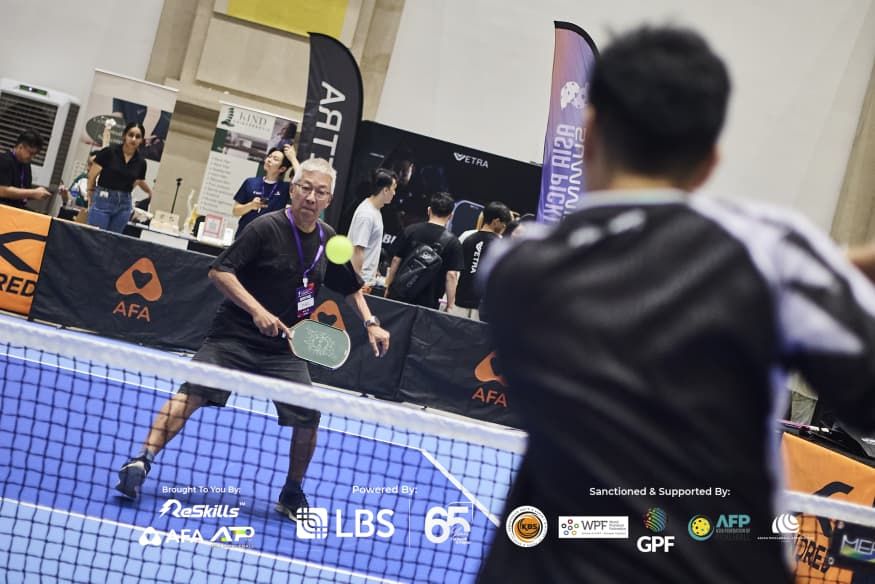
Mapping Out the Future of Pickleball at APS 2.0
“For the sport to grow, you must always encourage youngsters to take up the game and at the same time have good equipment to support their aspirations,” Lee said. “The equipment must also be priced at a reasonable level for them to pick up the sport.”
Ken Lim, for his part, framed APS 2.0 as a platform built not to celebrate what pickleball has already achieved, but to map out what comes next.
“APS 2.0 is the answer to what comes next—a high-level platform designed not just to celebrate the sport’s momentum, but to secure its long-term, scalable future,” Lim said.
The summit ran across two days and three formats—conference talks, an exhibition expo featuring 29 booths, and networking gameplay sessions that put participants directly on court alongside industry leaders. Lim confirmed that APS 3.0 is already being planned for next year, with ambitions to deepen Malaysia’s standing as a regional hub for the sport.
The adults are already playing. The work now is making sure the next generation picks up a paddle.