
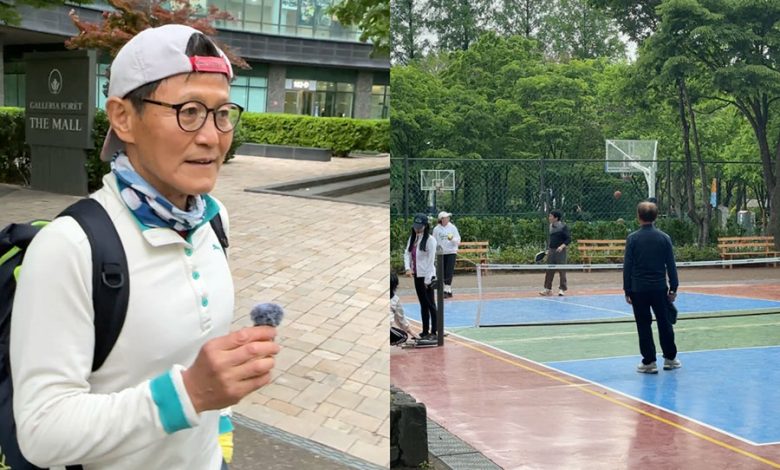
The sound of plastic paddles striking hollow balls is getting harder to ignore in South Korea—and the courts where jokgu once ruled are increasingly being taken over by a faster-moving crowd.
Pickleball is no longer a niche sport for older players in Korea. It is attracting young office workers, foreign residents, and former tennis players at a pace that has caught even longtime organizers off guard. Seoul made it official in April, opening a 14-court pickleball complex at Gwangnaru Hangang Park—one of the city’s largest dedicated facilities for the sport to date.
The growth has a familiar engine. Celebrity visibility has accelerated awareness in South Korea the same way it did in the United States. Television personality Jun Hyun-moo has referenced the sport on variety programmes, while BTS members Jin, V, and RM discussed playing pickleball together during a live stream while on tour—with V recounting how he first discovered it in Hawaii. Clips of the group playing in San Jose have since circulated widely online.
Former Korea Tennis Association board member Cho Min-jung saw the shift coming. She converted her indoor tennis facility into a dedicated pickleball venue called the Pickle Box, citing both the sport’s accessibility and worsening economic conditions pushing players away from the higher costs of tennis.
“Tennis is only really fun once you can rally and play matches, but getting to that stage takes a long time,” Cho said. Pickleball’s appeal, she added, is that beginners can “start rallying almost immediately.”
But the sport’s rapid rise has exposed a growing infrastructure gap. Lee Chul-hee, 71, the inaugural president of the Seongdong-gu Pickleball Association, said player numbers have far outpaced the available courts—particularly for older players who rely on public facilities and cannot afford private rentals.
“At Seoul Forest, there simply aren’t enough courts for everyone to play at the same time,” Lee said. “The popularity is definitely growing. But the infrastructure still hasn’t fully caught up.”
Whether the trend holds is a genuine question in a country known for embracing—and quickly abandoning—lifestyle crazes. But the players and coaches who spoke to The Korea Herald were cautiously optimistic, pointing to pickleball’s low cost, health benefits, and community-driven nature as reasons it will outlast the hype.
“As long as people are looking for ways to exercise and socialize casually,” Cho said, “I think pickleball will continue growing.”


One Comment