Leapmotor APP Asia Penang Open 2026 Crowned Its Champions, But Asia’s Next Generation Stole Headlines

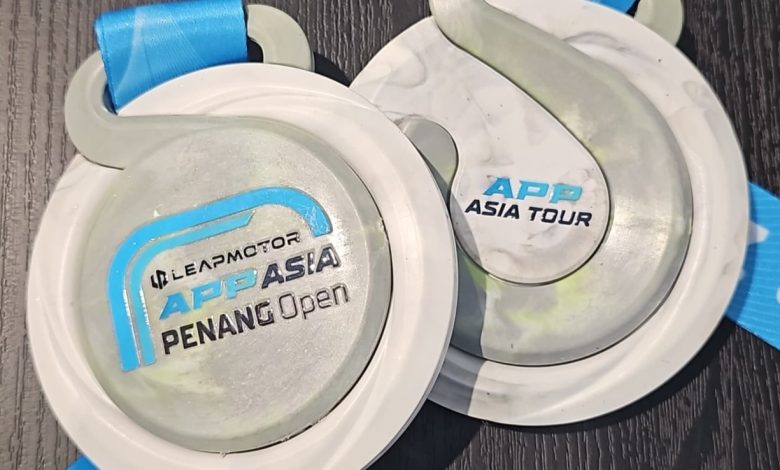
Roos Van Reek walked away from the Leapmotor APP Asia Penang Open 2026 with a Triple Crown, and Quang Duong left with a double gold of his own. Between them, they should have owned every storyline coming out of Gurney Drive. Instead, the tournament’s most talked-about performer wasn’t a champion at all. He was a 16-year-old runner-up who’d never touched a pickleball paddle professionally until recently—and by the time the week was done, he’d made sure nobody in Penang was talking about anything else.
That, more than any medal count, is the real story of the second stop on the inaugural APP Asia Tour.
Asia’s Next Generation Rises
The name to know now is Phoenix He. The Chinese teenager, a former national table tennis champion turned pickleball convert, tore through a stacked men’s singles bracket, knocking out a string of seasoned internationals before finally running into Duong in the final. He left with silver, not gold—but a 16-year-old reaching a pro singles final on one of the sport’s most competitive Asian stages isn’t the kind of result that needs a trophy to make its point.
He wasn’t alone in making Penang feel like a preview of the region’s future. Malaysia’s Aiman Hamdan claimed bronze in men’s singles, the host nation’s only professional podium finish of the week—a genuinely career-defining moment for a player fighting for recognition on his own turf. Elsewhere in the draw, Khoo Er Yang pulled off one of the tournament’s biggest upsets by dispatching top seed Jack Foster, while Dylan Ooi clawed back from a game down to beat Australia’s third seed Brian Tran. Two Malaysians, two statement wins, both advancing deep into the bracket.
None of these players left Penang with a singles title. All of them left with something arguably more valuable: proof that Asia’s depth chart runs a lot further than the top of the seedings suggests.
Building Something Big With APP Asia
None of this happens by accident, and it’s worth pausing on why a 16-year-old and a pair of Malaysian upstarts even got the chance to test themselves against the sport’s best in the first place. The APP Asia Tour runs on an open format—professionals and unaffiliated hopefuls sharing the same bracket, competing for the same ranking points, with no separate ladder keeping the region’s rising talent quarantined from the established names.
It’s also, notably, the first professional circuit in Asia to carry sanctioning from both the Asian Pickleball Association and the Asia Federation of Pickleball—the kind of administrative backing that turns a promising tournament series into something closer to a legitimate pathway. Juniors, seniors, amateurs and full-time professionals all competing under one roof isn’t just a nice piece of marketing copy. It’s the actual mechanism by which a player like Phoenix He gets to share a court with Quang Duong instead of reading about him from a distance.
Penang was only the second stop. Kuala Lumpur came first, and the calendar now points to China, Thailand, Chinese Taipei, Vietnam and India before the Tour’s inaugural season is through—five more chances for a region’s worth of Phoenix Hes and Aiman Hamdans to test themselves against the sport’s elite, and five more chances for the elite to discover just how quickly the gap is closing.
Van Reek’s triple crown and Duong’s double gold will headline the record books from this one. But records are a snapshot of who won. What actually travels with this Tour from city to city is the growing suspicion that the next name at the top of that podium might not be a Van Reek or a Duong at all. It might be someone barely old enough to have finished school, who spent last year at a table tennis table instead of a pickleball court.
Penang didn’t just crown its champions. It put the rest of Asia on notice.