Pickleball, once a quirky American backyard invention, is now a global sport with serious ambitions. In Japan, its rise has been nothing short of dramatic. Player numbers have multiplied, governing bodies have unified, and companies are investing in courts, equipment, and sponsorships. With the Pickleball World Cup in Vietnam adding momentum and Brisbane 2032 looming as a potential Olympic debut, Japan finds itself at the centre of a new sporting market.
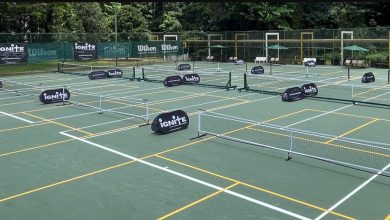
Among the most striking corporate adopters is Sansan, a firm better known for business card and invoice management. Earlier this year, it launched a Pickleball Business Promotion Office and built a dedicated court in Ikebukuro, Tokyo. For Sansan, pickleball is more than recreation—it is a networking tool. Head of the initiative Ryosuke Koike explained that the sport embodies the company’s mission of bringing people together to spark innovation. Inspired by founder Chikahiro Terada’s experience of pickleball as a business networking tool in the United States, Sansan is now preparing to launch a company league in October, with ambitions to professionalise the format.
Sansan’s footprint in Japan’s pickleball boom is well documented, having served as main brand sponsor of two high-profile, world-level tournaments already. Last year, the company hosted the Sansan Fukuoka Open 2025 that brought in several pickleball superstars from all around the world. Then, this year, it helped hold the Sansan Tokyo Open, which proved to be as successful as its predecessor from a year ago.
A Pandemic‑Driven Boom
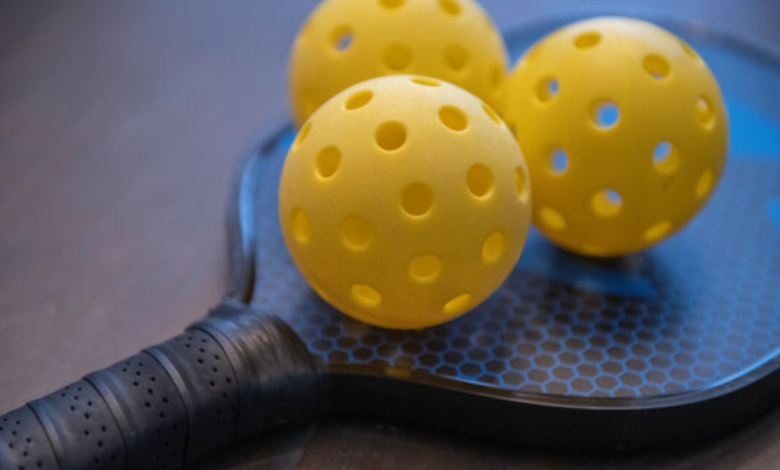
The sport’s appeal lies in its accessibility. Played with paddles and a perforated plastic ball on a badminton‑sized court, pickleball slows rallies enough to make it enjoyable for beginners while still offering tactical depth for experienced players. During the pandemic, its outdoor nature made it a safe alternative to crowded indoor sports, and its popularity in the United States soared. Celebrities such as Bill Gates and Leonardo DiCaprio joined the ranks of enthusiasts, while Major League Pickleball transformed the game into a professional spectacle with prize money in the millions.
Japan has not been left behind. According to Pickleball One, the country’s player base has jumped from 45,000 to around 330,000 in just a year. Shigeru Nishigami of the newly unified Pickleball Japan describes two waves of growth: first, returnees from the United States who wanted to continue playing, and second, travellers who discovered the sport abroad and brought it home. The federation promotes pickleball as a sport for all generations, and its merger with the Japan Pickleball Association earlier this year has given the game a stronger institutional backbone. With unified rules and governance, Japan is better positioned to support the sport’s Olympic ambitions.
“There have been two waves of the boom,” said Shigeru Nishigami, Vice Director of the Japan Pickleball Federation. The first came after the pandemic, driven by people returning to Japan from the United States who asked where they could play. The second wave followed, driven by people who traveled from Japan to the United States, saw the sport firsthand, and then came home asking the same question.
Big Brands Stepping In
The corporate interest extends beyond networking. Sporting goods giant Mizuno has entered the pickleball market with conviction, launching its ACROSTRIKE LX paddle in August. Drawing on expertise from baseball and golf, Mizuno incorporated adjustable weighting technology from its golf clubs into the paddle design. Players can shift the balance to favour either power or control, making it versatile for different playing styles. The paddle sold out in parts of the United States soon after release, signalling strong demand. Yet Mizuno recognises that equipment alone will not sustain the boom. The company has been running clinics and trial sessions nationwide, aiming to tackle what Nishigami calls the sport’s biggest obstacle: a shortage of courts.
Real estate giant Mitsui Fudosan has also played a pivotal role. Since 2024, it has been embedding pickleball courts into shopping malls and community spaces, turning commercial properties into hubs of social connection. In land‑constrained cities, pickleball’s small footprint makes it ideal. By providing venues, Mitsui Fudosan has helped transform pickleball from a niche sport into a community activity, where colleagues, neighbours, and families can meet through play. Their early investment has paid off, with pickleball now woven into the social fabric of urban Japan.
More Than a Passing Fad
The challenge now is to ensure pickleball’s growth in Japan is not fleeting. Sansan sees it as a business tool, Mizuno as a new market pillar, Mitsui Fudosan as a social connector, and Pickleball Japan as a unified governing body. Together, they are laying the groundwork for pickleball to become more than a trend. With momentum building, the question is not whether Japan will embrace pickleball, but how far it will go in shaping the sport’s global future.